The Audi A4 is a genuinely well-engineered car. The B8 and B9 generations in particular brought a level of driving refinement and interior quality that’s hard to match at the same price point. But well-engineered and problem-free are two different things, and the A4 has its share of failure patterns that Austin owners run into with enough regularity that we know exactly what to look for when one comes into the shop.
At German Auto Center, we’ve been working on Audi vehicles in Austin since 1979. We see B8s and B9 A4s regularly, and the same warning signs come up again and again in different combinations. This guide covers what those warning signs actually mean, which ones you can monitor and which ones you should not drive through, and what to expect when you bring an A4 in for diagnosis.
If you’re not sure whether what your A4 is doing is serious, the answer is almost always to get it checked sooner rather than later. Audi’s engineering complexity means that small problems left alone have a way of becoming expensive ones.
Understanding Your Audi A4 Engine Before We Talk About Problems
The B8 A4 sold from 2009 through 2016 used Audi’s EA888 2.0 TFSI engine in first and second-generation form. The B9 A4 launched in 2017 brought the third-generation EA888, which Audi updated substantially to address some of the known issues with earlier versions. Knowing which generation you have matters, because the failure patterns differ.
The Gen 1 and Gen 2 EA888 (B8 cars through roughly 2013) carry known issues with excessive oil consumption, PCV system failures, and timing chain tensioner weakness. The Gen 3 EA888 in B9 cars addressed most of the oil consumption issues through a revised piston ring design, but introduced its own characteristic patterns around carbon buildup on direct injection engines and the occasional DSG software sensitivity.
We also see the 2.0 TDI diesel A4 in Austin on occasion, which has its own separate set of warning patterns, particularly around the diesel particulate filter and EGR system. If you have the diesel, most of the warning sign guidance below still applies, but the engine-specific notes are focused on the TFSI gasoline engine.
Check Engine Light on an Audi A4: What It Usually Points To
Should I keep driving my Audi A4 with the check engine light on?
A steady check engine light with normal driving behavior is worth investigating within a few days but is generally safe for a short period. A flashing check engine light on an A4 means there is an active misfire and you should reduce load on the engine immediately. Misfires on turbocharged direct-injection engines like the EA888 can damage catalytic converters quickly, and the cats on an A4 are not cheap to replace.
The most common check engine causes on B8 and B9 A4s fall into a few consistent categories. Oxygen sensor faults are frequent, particularly on higher-mileage B8 cars. Mass airflow sensor contamination shows up regularly in Austin, where the combination of highway dust and heat accelerates sensor fouling. On the B8 specifically, PCV system faults and vacuum leaks are a consistent pattern. The crankcase ventilation valve on the Gen 1 and Gen 2 EA888 fails with some regularity and throws codes that can look like a boost or fuel trim issue before the root cause is identified.
On B9 cars, carbon buildup on the intake valves is worth knowing about. Direct injection engines like the EA888 do not wash the intake valves with fuel the way port-injected engines do. Over time, carbon deposits build up on the valves and affect airflow and combustion efficiency. This typically becomes noticeable between 50,000 and 80,000 miles and can trigger codes related to rough idle, misfires, and lean fuel trim. An intake walnut blasting service clears the deposits and restores normal combustion.
Diagnosing an Audi A4 properly requires VCDS or manufacturer-compatible diagnostic software. Generic OBDII scanners return basic fault codes. They do not surface the manufacturer-specific faults stored in Audi’s control modules for the engine, transmission, and suspension systems. If a shop diagnosed your A4 with a standard scanner, you may not have the complete picture.
Oil Consumption and Oil Leaks: A Known Audi A4 Pattern
Why does my Audi A4 burn through oil so quickly?
Excessive oil consumption on the B8 A4 is one of the most well-documented Audi ownership issues in this generation. The Gen 1 and Gen 2 EA888 engines used piston ring specifications that, under certain driving conditions, allow oil to pass into the combustion chamber and burn off. Audi’s own consumption standard for the EA888 was one liter per 1,200 miles at one point, which most car owners would consider a significant problem rather than a specification.
If you have a B8 A4 and you are adding oil between changes, the first thing we check is the PCV system. A failed crankcase ventilation valve creates pressure buildup that forces oil past seals and into the intake. The valve itself is a relatively inexpensive repair, and addressing it early prevents the secondary damage that comes from running the engine with compromised crankcase pressure management. Beyond the PCV, valve stem seals and turbocharger oil seals can contribute to consumption on higher-mileage B8 cars.
On B9 cars, the revised piston rings largely resolved the consumption issue. If a B9 A4 is consuming oil at an unusual rate, the starting point is an oil leak inspection rather than an internal consumption diagnosis. Common external leak points on the EA888 include the camshaft adjuster solenoid seals, the oil filter housing gasket, and the valve cover gasket. Any of these can produce a burning oil smell after a drive as oil migrates onto hot exhaust components.
Check your oil level once a month on any A4. It takes two minutes and it catches both consumption and external leaks before they become emergencies. This is especially true on B8 cars.
DSG and S Tronic Transmission Warnings You Should Not Dismiss
What does a shudder or hesitation mean on an Audi A4 with a dual-clutch transmission?
The S tronic dual-clutch transmission fitted to many A4 models is an outstanding gearbox when it is maintained correctly and a source of genuine frustration when it is not. The most common complaint we hear from A4 owners is a shudder or judder during low-speed engagement, particularly in stop-and-go traffic or when pulling away from a stop at low throttle. This typically points to mechatronic unit wear, clutch pack degradation from extended fluid intervals, or both.
The mechatronic unit is the electro-hydraulic control assembly inside the S tronic. It manages clutch engagement, gear selection, and shift timing. Fluid contamination accelerates wear on the mechatronic, and the recommended fluid service interval is often ignored because Audi originally marketed the S tronic as a sealed-for-life unit. It is not. Fluid should be changed at reasonable intervals, and mechatronic issues caught early are far less expensive to address than a full transmission rebuild.
Other S tronic warning signs include a noticeable hesitation when selecting Drive or Reverse from Park, a delay between shifting paddles and actual gear change that has grown more pronounced over time, and occasional error messages related to transmission temperature. On the CVT-equipped A4 (less common but present in some trim levels), the primary concern is belt and pulley wear that shows up as a slipping sensation under load.
Sompong Plangklang, one of our long-term customers, described what he looks for in a shop simply and well. “The only efficient, honest, and straightforward that I can trust.” That is the standard we hold ourselves to when diagnosing a transmission problem. We tell you what we find, what it means in plain terms, and what the realistic repair path looks like before any work begins.
Electrical Faults, Instrument Cluster Issues, and What Causes Them
Why does my Audi A4 have multiple warning lights on at the same time?
Multiple warning lights appearing simultaneously on an A4 almost always trace back to a single underlying cause rather than multiple independent failures. Audi’s electronics architecture is deeply integrated across modules, and when one system develops a fault or the voltage supply becomes unstable, cascading fault codes across unrelated systems follow quickly.
The 12-volt battery is the single most common cause of multi-system warning light events on Audi vehicles. A battery that is weakening but not fully dead can produce unstable voltage that triggers faults in the ABS control module, the ESP, the MMI, and the transmission control unit simultaneously. Replacing the battery and registering it with the correct Audi software clears all of them at once. Battery registration is not optional on modern Audi vehicles. A new battery installed without registration causes the charging system to treat it as a worn battery and can shorten its life significantly.
Instrument cluster failures on the B8 A4 are a documented pattern, particularly pixel loss and backlight failure on the analog gauge cluster. These are typically a solder joint or display component issue and can often be repaired rather than replaced outright.
One thing we see regularly on A4s that have spent years in Austin is water intrusion damage to control modules from clogged sunroof drains and clogged plenum tray drains. The sunroof drain channels run through the A-pillar and B-pillar to exit under the car. When they clog, water backs up and finds its way into the footwell and behind the dash. The footwell modules on the B8 A4 sit low in the cabin and are particularly vulnerable. If your A4 has ever had a musty smell after rain or you have found moisture on the carpets, a drain inspection and module check is worth doing before the next heavy rain season.
We had an Audi owner come in as a first-timer who mentioned that after-hours drop-off had left them uncertain about their car’s security. Our service advisor made sure to lock the vehicle in our lot overnight and coordinated with a neighboring shop to handle a slow tire leak at no extra charge. That is the kind of attention we give every car regardless of whether the job is a complex diagnosis or a routine service.
Suspension Wear and Steering Alignment Issues on the Audi A4
How do I know if my Audi A4 needs suspension work?
The A4’s multilink rear suspension and MacPherson front strut setup deliver excellent handling, and they do so by using more components with tighter tolerances than simpler suspension designs. That means there is more to wear. The upside is that the A4 gives clear warning before suspension problems become serious if you know what to listen for.
The most common suspension wear patterns we see on Austin A4s are front lower control arm bushing degradation, rear trailing arm bushing wear, and tie rod end wear. Worn control arm bushings produce a knocking or clunking sound over rough pavement, particularly on the compression stroke when hitting a pothole or expansion joint. Austin’s road surface is not kind to suspension bushings, and the combination of heat expansion and road impact means we see bushing wear on A4s earlier here than in milder climates.
Steering wheel vibration at highway speed on an A4 is worth diagnosing correctly before replacing wheels and tires. We see A4s come in after other shops replaced tires and balanced wheels without resolving the vibration, because the root cause was a worn front strut mount or a loose inner tie rod. A proper inspection with the wheel assembly removed tells you far more than a visual inspection with the car on the ground.
Premature tire wear is usually the first visible sign of an alignment issue caused by suspension wear. If your front tires are wearing unevenly across the tread face, or if rear tires are wearing faster on one edge than the other, bring it in for an alignment inspection before you replace the tires. Replacing tires on an out-of-spec alignment just wears the new tires the same way.
Cooling System, Water Pump, and Timing Chain: What to Watch on the EA888
Does the Audi A4 have timing chain problems?
On the B8 A4 with the Gen 1 and Gen 2 EA888 engine, timing chain tensioner wear is a real concern on higher-mileage cars, particularly those that have run extended oil change intervals. The tensioner uses oil pressure to maintain chain tension, and when the oil becomes dirty or the tensioner wears, chain slack develops. The early warning sound is a brief rattling noise on cold start that settles after the engine builds oil pressure, typically within the first few seconds of running. If you hear this on your B8 A4, do not ignore it. A stretched timing chain that skips a tooth causes significant engine damage.
The water pump on the Gen 1 EA888 uses an impeller made of plastic that can degrade and separate from the shaft over time. When the impeller fails, coolant circulation stops while the pump appears to run normally because the shaft is still turning. The symptom is an engine that overheats despite normal coolant level and no visible leaks. This failure is fairly well documented and most experienced Audi technicians check impeller condition during any timing service on these engines.
The Gen 3 EA888 in B9 cars improved on both of these items with a revised tensioner specification and a metal impeller water pump. But the cooling system still requires attention. The thermostat and expansion tank are wear items on any Audi, and the expansion tank on the EA888 is a pressurized plastic component that develops cracks over time. A cooling system pressure test as part of a major service interval catches slow leaks before they become overheating events.
Austin’s heat puts meaningful additional stress on any cooling system. A component that would last 100,000 miles in a cooler climate may show wear at 70,000 here. We recommend checking coolant condition and pressure testing the system every three years on any German vehicle driven in Central Texas.
Which Audi A4 Warning Signs Need Immediate Attention and Which Can Wait
Not every warning demands same-day action. Here is a straightforward breakdown based on what we see in the shop.
Stop driving, address immediately: Temperature gauge climbing above normal, oil pressure warning light, flashing check engine light with engine roughness, any warning accompanied by smoke, grinding from the drivetrain, or sudden loss of power steering assist.
Schedule within 24 to 48 hours: Flashing check engine light without other symptoms, transmission fault message, multiple warning lights appearing together, cold-start timing chain rattle that persists beyond a few seconds, any change in transmission behavior including shudder or hesitation.
Schedule within the week: Steady check engine light with normal driving behavior, suspension knock over rough pavement, oil consumption increase noticed at your monthly check, instrument cluster display issues, steady low-level oil seep with no burning smell.
When in doubt, call us at (512) 452-6437. A short conversation tells you which category you’re in.
Why Austin Audi A4 Owners Choose an Independent Shop Over the Dealership
Audi dealership labor rates in Austin are among the highest in the market, and the service experience at a high-volume dealership is rarely personal. Owners who bring their A4 to an independent Audi shop in Austin with the right tools and expertise consistently find the same quality of diagnosis and repair at significantly lower cost.
The equipment side of this matters on an Audi in particular. VCDS and manufacturer-compatible diagnostic software surface fault codes and live data that generic tools do not reach. At German Auto Center, we use Audi-compatible diagnostic equipment on every car we service. The difference in what gets found during a diagnostic scan is meaningful, and it directly affects the accuracy of the repair recommendation.
Klaus W, who has been bringing his Audi to us for years, described the experience this way: “They clearly describe what needs to be addressed on my car. They work with me and accommodate my needs and circumstances as much as possible. I don’t know any place in Austin that even comes close.” That is the relationship we aim for with every Audi owner who walks through the door.
Frequently Asked Questions
What are the most common Audi A4 problems in Austin?
+
The most frequent issues we diagnose on Austin A4s include check engine lights from PCV failures, oxygen sensor faults, and carbon buildup on B9 direct-injection engines. Oil consumption and oil leaks on B8 cars from camshaft solenoid seals and valve cover gaskets. S tronic transmission shudder from extended fluid intervals. Timing chain tensioner wear on higher-mileage Gen 1 and Gen 2 EA888 engines. Suspension bushing wear from Austin road conditions. Water intrusion into control modules from clogged sunroof drains.
Is it safe to drive an Audi A4 with the check engine light on?+
A steady check engine light with normal driving behavior is generally safe for a few days but should be diagnosed promptly. A flashing check engine light indicates an active misfire and the car should not be driven under load until it is diagnosed. Any check engine light accompanied by rough running, a temperature change, or a loss of power should be treated as urgent.
How often should the DSG or S tronic transmission fluid be changed on an Audi A4?+
Despite Audi’s original sealed-for-life claim, most independent Audi specialists recommend a fluid service every 40,000 miles under normal driving conditions and sooner if the vehicle is used in stop-and-go traffic regularly. Austin commute conditions qualify as more demanding than average. Fresh fluid is the single most effective way to extend S tronic life and prevent the mechatronic wear that leads to expensive repairs.
What causes the cold-start rattle on a B8 Audi A4?+
A brief rattle on cold start that clears within a few seconds on a B8 A4 with the Gen 1 or Gen 2 EA888 engine is typically the timing chain tensioner taking a moment to build oil pressure. If the rattle lasts longer than a couple of seconds or has become more pronounced over time, have the tensioner and chain condition inspected. Timing chain damage on this engine is not a minor repair.
Does German Auto Center provide Audi Repair in Austin for all A4 generations?
+
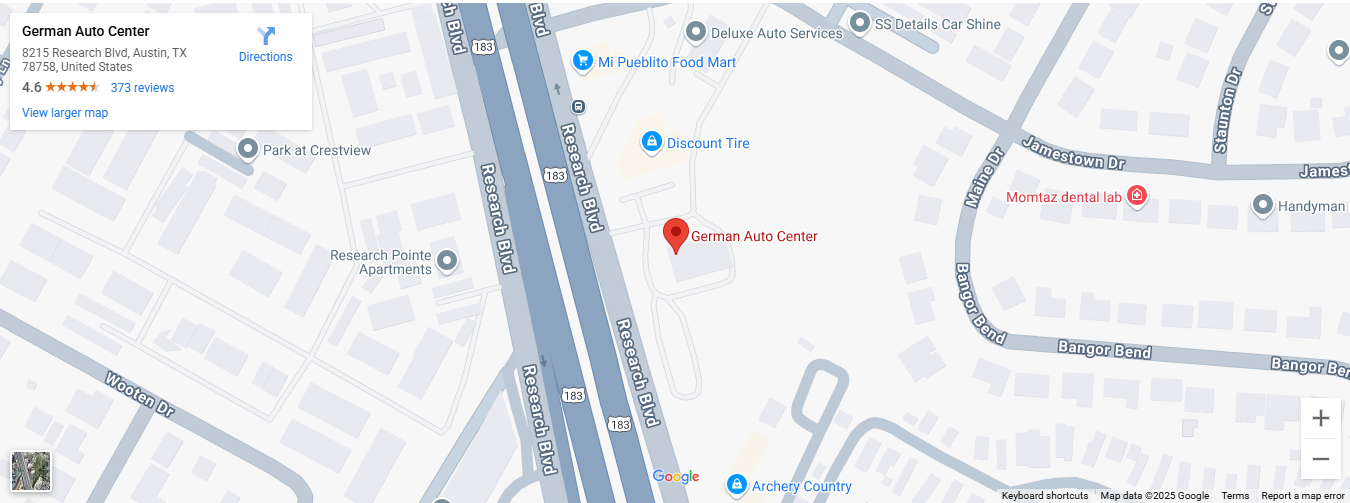
Yes. We service B8 and B9 A4s as well as other Audi models including the A3, A6, Q5, and Q7. We use VCDS-compatible diagnostic equipment, Bosch-supplied OEM components, and ASE-certified technicians. Our shop is at 8215 Research Blvd, Austin TX 78758. Call (512) 452-6437 or schedule online at germanautocenter.com.
How do I know if my Audi A4 has a water intrusion or sunroof drain problem?
+
Signs of a clogged sunroof or plenum drain include a musty odor inside the cabin after rain, damp carpet in the footwell, or visible moisture on the lower dash. If you notice any of these on a B8 A4, have the drain channels inspected and the footwell modules checked for corrosion before the next significant rain. Water-damaged modules on the A4 are expensive to replace and the damage is progressive once moisture gets in.
If your Audi A4 is showing any of the warning signs above and you want a straight answer on what is actually going on, call us at (512) 452-6437 or schedule online. Bring it to 8215 Research Blvd in Austin and we will run a proper diagnostic, give you an honest assessment of what we find, and tell you what needs attention now versus what can wait. No pressure, no guesswork.