The BMW i3 was never a conventional car, and it doesn’t need conventional ownership. But once the warranty expires, a lot of i3 owners find themselves in unfamiliar territory. The dealership is expensive. Most independent shops don’t have the training or equipment to work on an electric drivetrain properly. And the internet is full of forum posts that range from genuinely helpful to completely wrong.
At German Auto Center, we’ve been servicing German and European vehicles in Austin since 1979. The i3 is a different kind of BMW, but it’s still a BMW. The same commitment to precision engineering that defines their combustion cars runs through the i3’s architecture, and it deserves the same level of attention when something needs service or repair.
If you own a 2016-2021 i3 in Austin and you’re trying to figure out what to watch for, what to budget for, and where to take it now that the dealer warranty is no longer in the picture, this guide is for you.
What Makes the BMW i3 Different From Other Electric Vehicles
The i3 was BMW’s first purpose-built electric vehicle, and they didn’t approach it like anyone else. The passenger cell is made from carbon fiber reinforced plastic, which is lighter and stronger than steel but requires different repair techniques if there’s structural damage. The aluminum chassis underneath carries the battery pack and electric motor, with the drive motor mounted at the rear axle.
Two versions were sold in the US market: the pure BEV (battery electric vehicle) and the REx, which adds a small two-cylinder gasoline range extender engine. The REx engine doesn’t drive the wheels. It runs a generator that charges the battery when the charge drops to a certain threshold, extending total range to around 150 miles. These are two meaningfully different cars when it comes to service and repair.
The 2016 model year brought a significant battery upgrade, jumping from the original 22 kWh pack to a 33 kWh unit. That’s the version most Austin owners are driving today. The 2018 and later cars received another upgrade to a 42.2 kWh pack. When someone tells us they have an i3, the first question we ask is what year and which configuration, because the service considerations are different.
BMW i3 Common Problems: What We See on 2016-2021 Models
The i3 has a solid reliability record compared to many early electric vehicles, but it’s not without its patterns. After years of seeing these cars come through the shop, here’s what actually shows up.
12-Volt Battery Failure
This is the most common i3 issue we encounter, and the one that catches owners off guard. The i3 uses a standard 12-volt lead-acid battery to power the car’s electronics and systems, separate from the high-voltage traction battery. When this battery weakens or fails, the car can refuse to start, show a cascade of warning lights, or behave erratically. The symptoms often look far more serious than they are.
The 12-volt battery on the i3 tends to wear faster than on conventional BMWs because of how the car manages its electronics. We recommend having it tested every two years on 2016-2019 models. Replacement is straightforward and not expensive. What’s expensive is getting stranded on MoPac because the 12-volt gave out and nobody told you to watch for it.
Charging Port and Charge Management System Issues
Charging port problems are more common on higher-mileage i3s, particularly cars that have relied heavily on DC fast charging. The charge port door actuator can fail, and the charge management system occasionally throws fault codes that don’t correspond to an actual hardware problem. These need a proper diagnostic scan, not a reset, to determine whether the code points to a real issue or a software glitch.
We see this more in Austin than in cooler climates. The heat accelerates wear on the charge port components, and cars that sit outside in direct sun through a Central Texas summer are working harder than BMW’s engineers likely anticipated. If your i3 is showing charging errors, bring it in before assuming the worst.
Range Extender (REx) Specific Issues
For REx owners, the small two-cylinder engine has its own maintenance requirements that are easy to overlook. The engine runs infrequently, which actually creates problems. Gasoline that sits in the small fuel tank can degrade. Spark plugs on a low-use engine can carbon up. The oil in the REx engine needs to be changed on a time basis, not just mileage, because it doesn’t accumulate miles the way a conventional engine does.
We’ve seen REx engines come in with old, degraded oil simply because the owner followed mileage-based intervals and the car never accumulated enough miles to trigger a service reminder. On a REx, change the engine oil every 12 months regardless of miles driven. That’s the interval BMW recommends, and it’s the one we stand behind.
Brake System: Less Wear, More Seizing
The i3 uses regenerative braking as the primary deceleration method. In practice, the friction brakes rarely get used in normal city driving. That sounds like good news, and in terms of pad and rotor wear it is. The problem is that rotors and calipers that sit unused can corrode and seize, particularly in humid conditions or after periods of light use.
We inspect the brakes on every i3 that comes in, regardless of the reason for the visit. Seized calipers and corroded rotors on a car with low pad wear is one of those things that owners don’t expect because everything looks fine on the surface. It’s also a reminder that low mileage doesn’t mean low maintenance.
Suspension and Tire Wear
The i3 runs on narrow, high-pressure tires designed specifically for the car. They’re not interchangeable with standard sizes. Because of the car’s weight distribution and the instant torque from the electric motor, rear tire wear can be uneven if alignment and tire rotation aren’t kept up. We check alignment on every i3 service, not just when something feels wrong.
Suspension components on the i3 are generally durable, but the car’s low weight and stiff setup means that impact damage from Austin’s rougher roads and parking lot obstacles shows up more readily than on a heavier sedan. If you’ve hit something hard enough to notice, have the suspension inspected before assuming everything is fine.
BMW i3 Service Intervals: What Actually Needs Attention
The i3 doesn’t have oil changes for the main drivetrain because it doesn’t have a conventional engine. But that doesn’t mean it’s maintenance-free. Here’s what needs regular attention on a 2016-2021 car.
Brake fluid: Every two years. Brake fluid absorbs moisture over time regardless of how much the brakes are used. On an i3 where the friction brakes are used sparingly, this interval matters more, not less.
12-volt battery: Test every two years, replace proactively at four to five years. Don’t wait for symptoms.
Cabin air filter: Every two years or 20,000 miles. In Austin’s air, probably closer to two years.
Tire rotation and alignment: Every 10,000-12,000 miles. The i3’s tires are expensive. Proper rotation extends their life significantly.
Cooling system (battery thermal management): The i3 uses a liquid cooling system to manage battery temperature. Coolant condition should be checked every three years. In Austin’s heat, this system works harder than average.
REx engine oil (if applicable): Every 12 months regardless of mileage.
Why i3 Owners Are Leaving the BMW Dealership
The dealership is the default for most i3 owners, at least while the car is under warranty. Once coverage expires, the math changes fast. Labor rates at BMW Austin are significantly higher than at a qualified independent shop, and for a car that needs routine service rather than warranty work, that difference adds up quickly.
Peter Awbrey, a Porsche owner who made the switch to independent BMW service in Austin after years at the dealership, said we do the work for a fraction of what the dealer charges, and the quality is equal or better. That experience isn’t unique to Porsche owners.
Dennis Dalton moved to Austin from Dallas with a drivetrain issue on his BMW 7-series. After we diagnosed and completed the repairs, he told us we had “immediately become his go-to shop” and that the team “went above and beyond to take a look at the entire car and let me know what may be an issue down the road, without any pressure at all to get it done that day.” That’s how we approach every BMW that comes through, including i3s.
The i3 does require technicians who understand electric drivetrain systems, battery management, and BMW-specific diagnostics. Not every independent shop is equipped for that. We use BMW-compatible diagnostic equipment and stay current on the specific systems in the i3. If something is outside what we can address, we’ll tell you that directly rather than guess.
Owning an i3 in Austin: What the Climate Does to These Cars
Austin’s heat is hard on electric vehicles in ways that temperate-climate owners don’t deal with. The battery thermal management system on the i3 works continuously to keep the pack within its optimal temperature range. That system runs harder here than it would in San Francisco or Seattle, and the coolant and components involved age faster as a result.
DC fast charging in extreme heat also accelerates battery degradation. If you’re relying heavily on fast chargers during Austin summers, expect slightly faster capacity loss over time than the EPA estimates suggest. This isn’t a flaw in the car. It’s physics. Slower Level 2 charging at home, particularly overnight when temperatures drop, is better for long-term battery health.
Damon Osgood, a longtime customer, described our shop as “the kind of place you build a long term relationship with.” For i3 owners, that kind of ongoing relationship with a shop that knows your specific car and its history is worth more than a one-time dealership visit every time something comes up.
Frequently Asked Questions
Can an independent shop work on the BMW i3?+
Yes, provided the shop has BMW-compatible diagnostic equipment and experience with electric drivetrains. German Auto Center services all BMW models including the i3. We have the diagnostic tools and training to handle i3-specific systems including the high-voltage battery management, charge port, and REx engine on applicable models.
What are the most common BMW i3 problems?+
On 2016-2021 models, the most common issues we see are 12-volt battery failure, charging port faults, REx engine maintenance neglect (on range extender models), brake caliper seizing from low friction brake use, and battery cooling system wear accelerated by Austin’s climate. Most of these are preventable with proper maintenance intervals.
How much does BMW i3 service cost at an independent shop vs. the dealership?+
Independent shop rates are typically 30-40% lower than BMW dealership labor rates for the same work. For routine service items like brake fluid, 12-volt battery replacement, and tire rotation, the savings are meaningful. For diagnostic work and more complex repairs, the gap is even larger.
Does the BMW i3 need oil changes?+
The main electric drivetrain does not require conventional oil changes. However, i3 REx models have a small two-cylinder range extender engine that requires an oil change every 12 months regardless of mileage. Pure BEV models still require brake fluid changes, coolant checks, and other fluid services on a regular schedule.
How long does the BMW i3 battery last?+
Most 2016-2021 i3 batteries hold up well through 100,000 miles with reasonable care. Factors that accelerate degradation include frequent DC fast charging, prolonged exposure to high heat without shade or climate control, and long periods of storage at very low or very high state of charge. Austin’s climate is a real factor, and maintaining the battery cooling system properly is important.
Can I bring my BMW i3 to German Auto Center for service?+
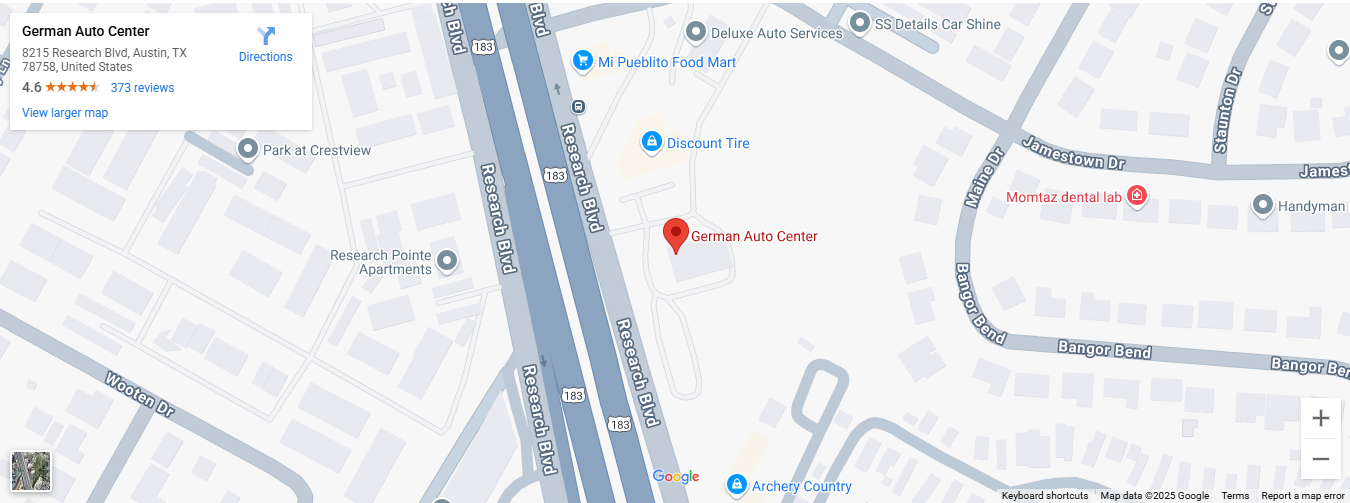
Yes. We service all 2016-2021 BMW i3 models including both BEV and REx configurations. Call us at (512) 452-6437 or schedule online. Our shop is located at 8215 Research Blvd in Austin.
If you own a 2016-2021 BMW i3 in Austin and you’re looking for a shop that knows these cars, give us a call at (512) 452-6437 or schedule online at germanautocenter.com. Bring it by 8215 Research Blvd and we’ll take a look, tell you what we find, and give you a straight answer on what it needs. No pressure, no guesswork.