Buying a used Porsche is one of the best decisions you can make as a driver, and one of the most expensive mistakes if you skip the right steps. At German Auto Center, we’ve been inspecting German and European vehicles in Austin since 1979, and the calls we dread most are the ones that come after someone signs the paperwork on a car they should never have bought.
A pre-purchase inspection won’t guarantee a perfect car. What it does is tell you exactly what you’re buying before the money changes hands. And on a Porsche, that difference can be worth thousands.
Why a Porsche PPI Is Different From a Regular Used Car Inspection
Most mechanics can look at a used Toyota and tell you whether it’s been maintained. Porsche is different. The engineering is more complex, the failure modes are more specific, and the repair costs when something goes wrong are in a different category entirely.
A general inspection on a used 911 or Boxster will miss the things that actually matter. The technician needs to know what generation they’re looking at, which engine is in it, and which known failure points are associated with that specific combination of model year and mileage. Without that knowledge, you’re paying for a visual once-over that gives you false confidence.
At German Auto Center, we are a Bosch Authorized Service Center and have been working on Porsches in Austin for over 45 years. When one comes in for a PPI, we’re not consulting a generic checklist. We’re working from decades of seeing exactly what breaks, when it breaks, and what it costs to fix.
Mark Buzz came to us after two difficult experiences with the service department at Porsche Austin. He put it simply: he needed “quality service at a realistic price.” That’s what a good PPI delivers. Real information, from people who actually know the car.
What Generation Are You Buying? It Changes Everything
Before we even lift the car, the first question is which Porsche you’re looking at. The inspection priorities shift significantly depending on the model, year, and engine. A 996 with 80,000 miles is a completely different conversation from a 991 with the same mileage. Treating them the same way is how buyers end up with expensive surprises.
Here’s how we approach each generation when a used Porsche comes in for inspection.
996 and 997.1: The IMS Bearing Question
If you’re shopping a 996 (1999-2004) or a 997.1 (2005-2008) with the M96 or M97 engine, the intermediate shaft bearing, known as the IMS bearing, is the conversation that has to happen first. Failure on these bearings can destroy the engine. We’ve seen it happen as early as 47,000 miles. It’s not a guarantee of failure, but it’s a risk that has to be evaluated and priced into any offer.
We also check for rear main seal leaks, bore scoring on the 3.4L M96 engines, and coolant pipe condition on any Cayenne with the V8. These aren’t maybes on high-mileage examples. They’re expectations.
One more thing worth mentioning on these cars: a clean engine bay can be misleading. If an engine has been steam cleaned before a sale, that’s a flag. It doesn’t mean the car is bad, but it means we look harder.
997.2 and 991: Cleaner, But Not Problem-Free
The 997.2 (2009-2012) moved to a direct injection engine that addressed the IMS issue. But direct injection brings its own maintenance requirement: intake valve carbon buildup. On a car that hasn’t had this addressed, you’re looking at a walnut blasting service that runs $500-$800. Not catastrophic, but worth knowing before you negotiate a price.
991-generation cars (2012-2019) are generally the most reliable modern 911s. The inspection here shifts toward suspension wear, PDK transmission service history, and whether the PASM (active suspension management) system is functioning correctly. Deferred PDK service is more common than people expect on private-party sales, and it’s not a cheap fix when it’s been ignored for too long.
Boxster and Cayman (986 and 987)
The 986 Boxster shares the M96 engine with the 996, so the same IMS concern applies. The 987 generation cleaned things up significantly, but we still check the RMS seal, coolant condition, and the intermediate shaft on early 987s.
One thing buyers overlook on mid-engine cars: water intrusion. The 986 and early 987 have known drainage issues that can lead to interior moisture damage and electrical problems that don’t show up on a CARFAX report. We’ve pulled carpets on cars that looked spotless from the outside and found problems the seller had no idea about, or chose not to share.
On the 987, we also pay close attention to the top on Boxsters. Hydraulic leaks in the convertible mechanism are common and can be expensive to trace. We test the full open and close cycle on every soft-top car we inspect.
Cayenne and Macan
The Cayenne V6 and V8 models have their own inspection priorities. Transfer case service history, air suspension compressor condition on PASM-equipped cars, and coolant system integrity all get a close look. The Cayenne’s air suspension is a known weak point as these cars age, and replacement compressors are not cheap.
The Macan with the EA839 3.0T is a strong engine, but we check carefully at the timing chain tensioner on early examples and verify the DSG service has been performed at the correct intervals. Skipped DSG service on a Macan is one of those deferred maintenance items that sellers often overlook and buyers often regret.
A Porsche Macan owner who brings her car to us regularly told us the work here is “professionally performed” and her car is “ready sooner than expected.” That’s the standard we hold ourselves to on every car that comes through, including ones we’re inspecting for a potential buyer.
What Our Porsche Pre-Purchase Inspection Actually Covers
A PPI at German Auto Center takes approximately two hours. We go through the car systematically, from the lift to the interior to the diagnostic port. Here’s what that time actually covers:
Drivetrain and engine: Visual inspection for leaks at the RMS, valve covers, and oil cooler. Compression check on request. Oil condition and evidence of coolant contamination. PIWIS diagnostic scan for stored fault codes, including codes that have been cleared before sale, which show up as readiness monitor flags.
Transmission: Fluid condition and service history verification. PDK function through the full range. On manual cars, clutch engagement feel and evidence of slippage.
Suspension and steering: All four corners checked for worn bushings, damaged control arms, and uneven wear patterns that indicate an alignment or structural issue. Porsche suspension components are expensive. This part of the inspection matters.
Brakes: Pad and rotor measurement. Caliper condition. Brake fluid moisture content test. We’ve had customers come in after another shop quoted a $4,000 brake job, only to find their brakes were perfectly fine. We tell you what we actually find.
Body and structural: Frame inspection on the lift for signs of prior collision repair that wasn’t disclosed. Paint thickness readings to identify repainted panels. Proper door, hood, and trunk gap alignment.
Interior and electronics: Full function check of all dash systems, PASM controls, Sport Chrono if equipped, HVAC, and heated seats. Convertible top operation on Boxsters.
Tires: Tread depth, age (DOT code), and wear pattern analysis. Uneven wear on a Porsche almost always points to something upstream, whether that’s an alignment issue, a suspension component, or a prior incident.
At the end of the inspection, we walk you through what we found in plain English, with a prioritized list of what needs attention now, what can wait, and what to factor into your offer price. No pressure, no upsell. Just what the car actually told us.
How a Pre-Purchase Inspection Pays for Itself
Peter Awbrey, a Porsche owner who found us after dealing with the dealership, said it directly: we do the work “for one third of what Porsche charges.” That gap matters most when you’re evaluating a used car, because the same cost advantage applies to any repair work that a PPI uncovers.
Here’s the math that actually matters. If a PPI costs $200 and reveals that a 997.1 needs an IMS bearing retrofit, a new RMS seal, and has a cleared fault code for a misfire, you now have either a negotiating lever worth several thousand dollars or a clear reason to walk away from that specific car entirely. Either outcome is worth far more than the inspection fee.
We have seen people skip a PPI to save $200 and then call us six weeks later with a bill that starts with a four. That’s not a rare story. It happens more than it should.
The inspection also gives you something harder to put a number on: confidence. Dennis Dalton moved to Austin from Dallas with a drivetrain issue on his 7-series. After we diagnosed and completed the repairs, he told us we’d “immediately become his go-to shop” and that he’d “rest easy knowing whatever issues may arise, I’ll be taken care of.” That peace of mind starts with knowing exactly what you’re buying.
Why Independent Porsche Repair in Austin Makes Sense for a PPI
There’s a reason more Austin Porsche owners are turning to independent Porsche repair Austin specialists rather than dealerships for pre-purchase inspections. A CPO inspection at a Porsche dealership is designed to clear the car for sale. That’s not a criticism. It’s just the nature of the process. The dealership has an interest in the transaction going through. An independent shop has no stake in the outcome.
When we inspect a used Porsche for a potential buyer, our only obligation is to that buyer. We’re going to tell them what we found, what it means, and what we’d do if it were our money on the line. That’s a different conversation than a pre-sale certification at a dealership.
Private party sales carry more risk, but also more room to negotiate when problems are found. Dealer sales come with more protection but less transparency about what was found and quietly addressed before the car went on the lot. Either way, an independent inspection from a shop with no stake in the sale gives you the clearest picture.
Klaus W., who has been bringing his Audi to us for years, put it well: “They clearly describe what needs to be addressed on my car. They work with me and accommodate my needs and circumstances as much as possible. I don’t know any place in Austin that even comes close.” That same approach carries over to every PPI we perform.
A Few Things Worth Knowing Before You Schedule
CARFAX is a starting point, not a conclusion. We’ve inspected cars with clean CARFAX reports that had obvious prior structural damage visible from underneath. CARFAX is only as good as what gets reported, and a lot doesn’t. Don’t let a clean report substitute for a physical inspection.
Bring the paperwork. Service records, if the seller has them, tell us a lot before we even start. A Porsche with complete dealer or independent shop records is a different car to inspect than one with a maintenance history that consists of “I had the oil changed somewhere.”
Budget for the findings. A PPI isn’t just a pass/fail exercise. It’s a condition report. Some of what we find will be urgent. Some will be items to watch. Some will help you negotiate. Go into the inspection ready to hear the full picture, and you’ll get the most out of it.
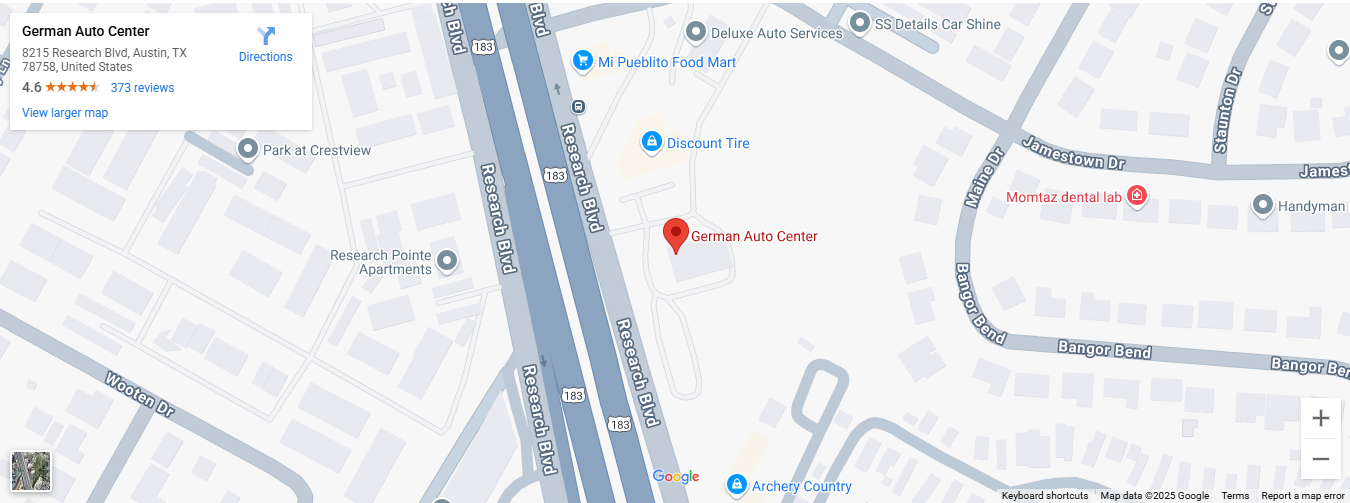
And if you’re buying a car from out of state and having it shipped to Austin, schedule the inspection before the purchase, not after. We can work with sellers directly to arrange the inspection at our shop at 8215 Research Blvd, or in some cases at the seller’s location. Call us before you commit to anything.
Frequently Asked Questions
What does a Porsche pre-purchase inspection include?
+
At German Auto Center, our Porsche PPI covers the engine and drivetrain, transmission, suspension, brakes, body and paint, electronics, interior systems, and tires. We run a full PIWIS diagnostic scan to surface stored and cleared fault codes. The inspection takes approximately two hours and ends with a written summary and a walkthrough with one of our technicians.
How much does a Porsche PPI cost in Austin?+
Our Porsche pre-purchase inspections typically run $150-$250 depending on the model and any additional diagnostic steps requested. That cost is almost always recovered in negotiating leverage, or in avoiding a car that would have cost significantly more to repair.
Is a PPI worth it on a used Porsche?+
Yes. Porsche repair costs are materially higher than most vehicles, and several model generations have known failure points, including the IMS bearing on M96 and M97 engines, that a standard visual inspection will miss. The cost of a PPI is negligible compared to the cost of an engine replacement.
What are the most common problems found on used Porsches?+
On 996 and early 997 cars, the IMS bearing and rear main seal are the primary concerns. On newer direct-injection cars, intake carbon buildup and deferred PDK service are common findings. Cayenne models frequently show deferred transfer case service and air suspension wear. On any used Porsche, we commonly find cleared fault codes and undisclosed prior damage that didn’t make it into the vehicle history report.
Can I bring a Porsche I haven’t bought yet to German Auto Center for an inspection?+
Yes, and we encourage it. The seller brings the car to our shop at 8215 Research Blvd, or in some cases we can arrange to inspect it at their location. Call us at (512) 452-6437 to schedule.
Does German Auto Center work on all Porsche models?+
We service all current and recent Porsche models including the 911, Boxster, Cayman, Cayenne, Macan, and Panamera. We are a Bosch Authorized Service Center with ASE-certified technicians and PIWIS-compatible diagnostic equipment.
If you’re seriously considering a used Porsche in Austin and want a straight answer on what you’re buying, give us a call at (512) 452-6437 or schedule online. Bring the car to us at 8215 Research Blvd before you sign anything. We’ll tell you exactly what we find, and what we think you should do with that information.